


Wendy was raised in a Christian home. She attended church with her family every Sunday morning, unless there was a gathering with extended family, a sports event, vacation, or people were just tired. During worship, once she outgrew the nursery, she she spent the hour in junior church, and then graduated into youth church. If on ocassion there were no youth church, she would join the main worship service, but of course she sat with her friends in the balcony.
College disrupted that pattern of life. She was on her own, an adult in a city and community of her own choosing. Many other choices confronted her immediately. Early rising or sleeping in? Fast meals or sit down? And worship? What would that look like? Would it have a place at all? At home, she was carried along by the current of family life. But now she had to steer her own boat, and perhaps even dig her own channels. For the first year, she just followed the new currents. Those were established by (she would later admit) laziness (she would sleep in on Sundays, having been up until 3 a.m. the night before) and the hurriedness of life at an academically demanding college.
As Wendy began her sophomore year, she decided she had to become more serious spiritually and, as she put it, "make time for God." She began reading the Bible each night before bed (something she had never done with any regularity), and she also began attending a Bible study in her dorm. A whole new dimension of life opened up. It was like emerging from the forest and seeing the sky for the first time. God was speaking to her through his word. They Holy Spirit would apply passages, illuminating circumstances and troubling her conscience in ways she had never experienced before. She started praying regularly. She realized that her Christianity had been like a new car sitting in the garage, owned but never operated. Now she found that a driving faith is what faith ought to be, and driving felt good.
By her junior year, Wendy was no longer "making time for God." That is, she saw that it was not good enough to give God a small guest room in the mansion of her life where she could drop in on him from time to time. She had grown beyond that. She had learned in her study of Paul's Letter to the Romans that Christ had redeemed all of her, that he had redeemed her from the life of self-focus and to the life of Christ-focus. People are either "slaves to sin, which leads to death, or to obedience, which leads to righteousness " (6:16). As someone put it, if Christ is not lord of all, he is not lord at all. She knew in her heart that this was true. That little room in her mansion was no good. The whole mansion had to house him. "From him and through him and to him are all things. To him be the glory forever!" (11:36).
That year, all sorts of things changed in Wendy's life. Relationships. Language. Even eating habits. The Lord lifted burdens of bitterness from her heart because she asked him to. And she asked him to because she knew there is nothing that is not his business and his sphere of blessing. Wendy was changed, and people could see it the way they could see the sunrise.
But her senior year was a time of growth in yet another essential element of the Christian life. Her Bible study group had finished Romans and moved on to the Gospel of John. In chapter four, the Holy Spirit startled her with these words: "Yet a time is coming and has now come when the true worshipers will worship the Father in spirit and truth, for they are the kind of worshipers the Father seeks. God is spirit, and his worshipers must worship in spirit and in truth" (4:23-24). She worshiped in her personal devotions and also at a student praise event most Thursday nights. That must be good as far as it goes, she thought. But she had become very serious about bringing all of her life under the gracious lordship of her Savior, and she could see that she was offering worship strictly on her own terms: the day of her choosing in the form of her choosing and when she chose to give it. Has God commanded something that she is neglecting, however? Is there something he has told his people is pleasing to him and edifying to them?
At the Bible study, she addressed this concern to a friend, Charis, who lived on her hall and whom she knew to be godly. Charis was active in the church she had adopted for her college years, and, from things Wendy had picked up, she knew that Charis had attended church faithfully at home, morning and evening, and had carried that habit with her to college. She would disappear on Sunday mornings to what she called her "church family" and would not show up again until late evening. She seemed to enjoy it, and come back refreshed each Sunday. This girl surely would know something about what God wants in the worship life of his saints.
Charis did not disappoint. She took Wendy straight to Hebrews 10:25, "Let us not give up meeting together, as some are in the habit of doing, but let us encourage one another." She added that, in the Book of Acts, the believers gathered together as a church on Sunday, the first day of the week, the day on which Christ the Savior had risen. And Jesus appeared to them at more than one of those meetings to confirm his approval of that pattern of worshiping together. In this setting, Christians "spur one another on to love and good deeds"--not just college friends, but older saints, and Christians from other walks of life. She also mentioned the blessing that her pastor (who is a wise, older man) sumptuously laid before her each week in his sermons. She was always challenged, always blessed, always grew. She was also grateful for the elders of her church who were wise and took seriously the responsibility Christ had laid on them for the care of his sheep (1 Peter 5:1-5). Charis drew close and looked very intently into Wendy's eyes. She said, "If Christ has given preachers and elders in his church for the blessing of his people, then if I am one of his people I will seek and get that blessing!"
Again the Holy Spirit was pressing these words into her heart, and where the words sank in they seemed to find their natural settings. As usual, where Wendy had previously been quite self-satisfied she now saw a gaping hole that only joyful Christian obedience could fill. Was there anything she was doing on Sunday that was better for her and more delightful than worship with the body of Christ? Was she able to feed and shepherd herself, perhaps with the help of friends, without the contribution of pastor and elders? Apparently, God's answer to both of these questions is, "no."
That Sunday, Wendy went with Charis to church. It required a subway ride and a bit of a walk, but that didn't matter. After a month of this habit, a habit she would never abandon by the way (and she would one day refuse a marriage proposal over it), Wendy marveled at all she had been denying herself by overlooking this dimension of the Christian life. She also reflected on the pattern of church life in which she had been raised. Committed, yet not. Sometimes God, sometimes me, which was essentially always "me." Nonetheless, she thanked God for her parents and for the exposure to Christ and his church they gave her as a girl. But she thanked God all the more for his gracious patience with her meandering, her half-hearted, and distracted pursuit of him. And she thanked him, as she would with her last breath, for Jesus the Good Shepherd who laid down his life for her, and who sought her when she was not seeking him.
Friday, February 26, 2010


Francis Bacon on Climategate
The recent scandal at the University of East Anglia that blew the lid off of what many thought was the dispassionate objectivity of the science supporting global warming hysteria would come as no surprise to Francis Bacon, arguably the father of what we now call modern science. In the New Organon, his 1620 argument for a new kind of science based on the severe discipline of a patient and rigorous method, he warned against the unreliability of the human mind in investigating nature:
Read my slightly larger reflection on this controversy at WORLDmag.com in "Political Climate Science."
The human understanding is no dry light, but receives an infusion from the will and affections; whence proceed sciences which may be called “sciences as one would.” For what a man had rather were true he more readily believes. Therefore he rejects difficult things from impatience of research; sober things, because they narrow hope; the deeper things of nature, from superstition; the light of experience, from arrogance and pride, lest his mind should seem to be occupied with things mean and transitory; things not commonly believed, out of deference to the opinion of the vulgar. Numberless in short are the ways, and sometimes imperceptible, in which the affections colour and infect the understanding (Book I, aphorism 49).
Read my slightly larger reflection on this controversy at WORLDmag.com in "Political Climate Science."
Thursday, February 11, 2010
The Novelty and Genius of Francis Bacon

The frontispiece to Sprat's History of the Royal Society
(Francis Bacon is on the right)
For over two hundred years, the scientific and philosophic cognoscente lauded Francis Bacon as the father of modern science of of our technological mastery over nature. It was not just Abraham Cowley of the Royal Society who compared Bacon to Moses and his vision of man enthroned over nature to the promised land. Rousseau considered him, along with Descartes, one of the "preceptors of the human race." John Dewey, in Reconstruction in Philosophy (1950), called him "the real founder of modern thought."
It has become common these days to withdraw such credit. Many take the position that Bacon was a mere popularizer of what many true scientists were doing before and during his time. Or they say that his method was insufficiently mathematical or that it simply bears little resemblance to what science has become.
Paolo Rossi, a great scholar of the late Renaissance and early Enlightenment period and of Francis Bacon in particular, offers this well-supported assessment of Bacon's importance as a founder in Philosophy, Technology and the Arts in the Early Modern Era (1962, 1970[tr.]).
The founders of the Royal Society, the authors of the great Enlightenment encyclopedias, and not a few positivist historians and philosophers of the nineteenth century, were fond of the portrait of Bacon as the "father of modern science" because of his discovery of the inductive method. But to consider Bacon still from this point of view would be tantamount, as Benjamin Farrington has trenchantly observed, to placing him on an inappropriate pedestal in an inappropriate part of the gallery.Many of Bacon's published thoughts on science were not original to him, even some of his more penetrating formulations. But he brought together, perfected, and gave force to what had been developing for a couple of centuries. That goes far beyond being a mere "popularizer."
Nevertheless, the facts remains that when Bacon turned to the mechanical arts, considering them capable of revealing the actual processes of nature, and saw in them that capacity to give rise to inventions and works absent in the traditional knowledge--when polemicising against the logic of the schools, he projected a history of the arts and of technics as an indispensable prerequisite to the reform of learning--he truly became the spokesman for the fundamental demands for the culture of his time. Bacon brought to full awareness some of the thematic ideas that had been making slow headway at the margins of the official science in that world of technicians, engineers, and builders to which men like Biringuccio and Agricola had belonged (pp.117f.).
Rossi documents that many of Bacon's criticisms of the medieval bookish approach to science and his great esteem for the practical over the merely theoretical were circulating among artisans and men of practical inquiry in the generations leading up to his own. Late medieval Europeans were not people of democratic views. There were noble classes and vulgar classes. Accordingly, there were activities suited to the dignity of a gentleman and there were activities as well as objects of study that were beneath him. The mechanical arts were considered base.
The defense of the mechanical arts against the charge of baseness, and the rejection of the notions that culture coincides with the horizon of the liberal arts and that practical operations are tantamount to servile labor, in reality implied the rejection of a certain conception of science, namely, of science as a disinterested contemplation of the truth... (p.x).
Whereas as early as 1603 Bacon called people to put their hope in a new "commerce between the mind and things," Bernard Palissy, a distinguished French potter (N.B. practical, base), claimed in 1580 that the art of observing nature must be founded on a "cult of things" as opposed to bookish learning and philosophical speculation (p.2). Bacon was not the first to emphasize the importance of closing with things themselves if there was to be any great progress in multiplying inventions. On the other hand, Bacon had far more in mind that Palissy, a potter, ever could.
Robert Norman, an English sailor who manufactured magnetic compasses and wrote on magnetism, was already in 1581 attacking the Western philosophic tradition for it's indifference to the practical fruit of inventions. He condemned the "learned" for "promising much and performing little or nothing at all" (p.5). Bacon despised them as boys, who talk but cannot generate (NO I.lxxi). He took his place among many who expected far more than the ancients and their followers could deliver, but his place was not among equals. The others saw some of the problem, and, accordingly, only some of the solution.
In the writings of various artisans and philosophers between 1530 and 1580, Rossi notices,
(1) the procedures of artisans, engineers, and technicians have a value for the ends of the progress of knowledge; (2) such procedures are recognized as having the dignity of cultural facts; and (3) men of culture must give up their contempt for "operations" or "practice" and discard every conception of knowledge that is merely rhetorical or contemplative to turn to the observation and study of techniques and the arts (pp.10f.).
While this statement makes it seem as though the cultural battle that must precede the wide embrace and successful execution of science was won, it was not so, and Rossi does not mean to suggest it was. Bacon took up that fight to his dying day because it was far from over and it required his genius for victory to fall to scientific civilization. A century and half after Bacon's death, in 1680, Richelet's Dictionnaire Français, in it's article on "Méchanique," says, "This term, speaking of particular arts, signifies that which is the opposite of liberal and honorable; it has the connotation of baseness and of being little worthy of an honest person." Much later still, Rossi tells us, "the French Jesuits were scanalized by what they thought was an excessive number of articles on technical subjects in Diderot's Encyclopédie" (p.12).
The great artists of the Renaissance helped eventually to dignify the practical arts with social respectability. But it took time. Again Rossi:
As Antal reminds us, in the fourteenth century art was still considered a manual skill. The artist was addressed with the familiar "thou" as were domestic servants. ... Almost all artists of the early fifteenth century came out of artisan, peasant, and petty-bourgeois melieus. Andrea del Castagno was the son of a peasant, Paolo Uccello of a barber, Filippo Lippi [1406-1469] of a butcher. ... The goldsmith's art was common to painters and sculptors. Brunelleschi, Donatello, Ghiberti, and Ghirlandaio were all goldsmiths at first (pp. 21f.).
Despite these facts, the Renaissance artist of the fifteenth century was rising socially. As Rossi puts it, "No affluent citizens and nobles would have considered the artist's status humiliating" (p.21). Rossi traces this change in people's estimate of art and artists to "the increasingly profane character of artistic production, to the ever greater weight of the opinion of lay persons, as well as to the social transition of artists from the status of artisans to that of bourgeois. Whereas Leonardo da Vinci (1452-1519) had been not only a painter and sculptor, but also an engineer, architect, and many other things, by the mid-sixteenth century, "commissions of an artisan character no longer appears in keeping with the dignity of the artists. This was the age when Charles V stopped to pick up the brush dropped by Titian [d. 1576]" (p.22).
We note from this, however, that artisans and engineers remained objects of disdain among the powerful and well born. Bacon labored not simply to defend the benefits and dignity of the mechanical arts. While the mechanic had been able to gain some insight into the workings of nature by his attention to "things" and had produced useful works, this field of activity was not the answer to the miserable condition of mankind.
In the New Organon (I.v), Bacon points us beyond this type of labor. "The study of nature with a view to works is engaged in by the mechanic, the mathematician, the physician, the alchemist, and the magician; but by all (as things now are) with slight endeavor and scanty success." Engineers have done good work with what they know, but a true attention to "things" will produce an understanding of nature's inner workings, formulated into "axioms." "The productions of the mind and hand seem very numerous in books and manufactures. But all this variety lies in an exquisite subtlety and derivations from a few things already known, not in the number of axioms" (NO I.vii). These can be derived only from what he called experiments of light, which are to be preferred over what were overhastily and exclusively pursued as experiments of fruit, and these would have to proceed by the disciplined method of investigation that he was proposing. "For axioms rightly discovered and established supply practice with its instruments, not one by one, but in clusters, and draw after them trains and troops of works" (NO I.lxx).
But to get to this point, people's approach to the world, one another, and all things had to be democratized. Bacon had to undermine and bury all notions of noble and base. We see that in New Organon Book I, aphorisms 119-121, where he calls serious searchers into the secrets of nature and all those who are ambitious to bring her under human dominion to overcome their indisposition to investigate things that are common, mean, or subtle.
And for things that are mean or even filthy — things which (as Pliny says) must be introduced with an apology — such things, no less than the most splendid and costly, must be admitted into natural history. Nor is natural history polluted thereby, for the sun enters the sewer no less than the palace, yet takes no pollution. And for myself, I am not raising a capitol or pyramid to the pride of man, but laying a foundation in the human understanding for a holy temple after the model of the world. That model therefore I follow. For whatever deserves to exist deserves also to be known, for knowledge is the image of existence; and things mean and splendid exist alike. Moreover, as from certain putrid substances — musk, for instance, and civet — the sweetest odors are sometimes generated, so, too, from mean and sordid instances there sometimes emanates excellent light and information (NO I.cxx).
Think of the many and various breathless investigations that had to be undertaken before we could come to the understanding that there was much useful information hidden within stool samples. The humor in the Scrubs number, "Check the Poo," is premised on the still common notion that looking into these things is beneath human dignity. But a scientist sets aside all such notions of dignity and nobility. Or at least he does today. Bacon had to argue for an attitudinal reorientation to get us here. Thus he entitled one of his major works defending his new science, Of the DIGNITY and Advancement of Learning. Learning had always been considered dignified...but not the sort of learning that Bacon argued was necessary to raise the dignity of the human race in power and comfort.
Howard White, in his seminal work Peace Among the Willows (1968), calls this new moral understanding that Bacon not only presents in argument but also insinuates with rhetoric his provisional morality. We see it largely in the Essays. "One has to see what kind of men are to take us from the world where politics controls science to the world where science is to control politics..." (p.43). The men of the future in whom Bacon's provisional morality has taken hold will be "the kind of men who are intended to take the voyage to the New Atlantis..." (p.32; also p.16). But once we all land on the shores of that blessed future and the regime of science takes charge, Bacon expects that we will transition to what White calls the "definitive morality" that Bacon pictures, albeit subtly in New Atlantis. The provisional is what we would call democratic, though not immediately and obviously, but the definitive is far more regimented than the mess that is individual liberty.
But I digress.
While many of these ideas were in the air that Bacon was breathing, and quite self-consciously, Bacon went far beyond them. Rossi points beyond these ideas to Bacon's novelty.
The appeal to "nature" and "experience" so widespread in the culture of the Renaissance (what type of knowledge and what culture, after all, do not appeal to a certain "nature and to a certain "experience"), the rejection of authority (Aristotle, Galen, Ptolemy), the "disputation" with the "ancients," and insistence upon the necessity of observation as such do not themselves imply acceptance of this ideal view of science.
This ideal has a public, democratic, and collaborative character, composed of individual contributions organized in the form of a scientific discourse and offered with the view of achieving a general success which becomes the patrimony of mankind. This conception of science, which found its first expression on a "philosophical" plane in the work of Francis Bacon, played a crucial role in the formation of the idea of progress...(p.64).
Tomasso Campanella, in his utopian work The City of the Sun (1602; published in Latin, 1623), expressed the hope people had in this notion of progress, linked as it was to the conquest of nature through an explosion of inventions, and that was buzzing among those who were at the forefront of learning. "Oh, if you knew what our astrologers say of the coming age, and of our age, that it has in it more history within a hundred years than all the world had in four thousand years before, of the wonderful invention of printing and guns and the use of the magnet..." (Rossi p.65). But he really had no way of getting there. It took Bacon to provide the instrument, the reliably effective organon.
Sunday, January 24, 2010
Conviction of Sin
The Christian life begins with what the Bible calls "conviction of sin," the sense that one is indeed a sinner in God's sight, deserving of condemnation, and in need of being saved from a miserable condition and a justly deserved eternal fate.
We see this portrayed in the New Testament most dramatically in Jesus' account of the Pharisee and the tax collector: "the tax collector, standing far off, would not even lift up his eyes to heaven, but beat his breast, saying, 'God, be merciful to me, a sinner!'" Explaining this, Jesus said, "I tell you, this man went down to his house justified, rather than the other (the self-righteous Pharisee). For everyone who exalts himself will be humbled, but the one who humbles himself will be exalted."
Ray Ortlund beautifully expresses the biblical teaching on conviction of sin in this passage.
I'm looking for the source of this passage in Ortlund's works.
We see this portrayed in the New Testament most dramatically in Jesus' account of the Pharisee and the tax collector: "the tax collector, standing far off, would not even lift up his eyes to heaven, but beat his breast, saying, 'God, be merciful to me, a sinner!'" Explaining this, Jesus said, "I tell you, this man went down to his house justified, rather than the other (the self-righteous Pharisee). For everyone who exalts himself will be humbled, but the one who humbles himself will be exalted."
Ray Ortlund beautifully expresses the biblical teaching on conviction of sin in this passage.
What is conviction of sin? It is not an oppressive spirit of uncertainty or paralyzing guilt feelings.
Conviction of sin is the lance of the divine Surgeon piercing the infected soul, releasing the pressure, letting the infection pour out.
Conviction of sin is a health-giving injury.
Conviction of sin is the Holy Spirit being kind to us by confronting us with the light we don't want to see and the truth we're afraid to admit and the guilt we prefer to ignore.
Conviction of sin is the severe love of God over-ruling our compulsive dishonesty, our willful blindness, our favorite excuses.
Conviction of sin is the violent sweetness of God opposing the sins lying comfortably undisturbed in our lives.
Conviction of sin is the merciful God declaring war on the false peace we settle for.
Conviction of sin is our escape from malaise to joy, from attending church to worship, from faking it to authenticity.
Conviction of sin is, with the forgiveness of Jesus pouring over our wounds, is life.
I'm looking for the source of this passage in Ortlund's works.
Monday, January 11, 2010
Our Modern Dance with Technology
As I re-immerse myself in the thought of Francis Bacon, the problem of technology, and the crisis of modernity, I expect to be posting frequently on the subject.
In my last post, I made reference to Louis c.k., one of the most prominent popular thinkers of our day on the problem of technology (you must understand I have a dry sense of humor...but at least I have a complete name). He appeared to be suitably impressed by the advances of the last hundred years (flight, high speed internet access, and even the latter while flying) while at the same time understandably disturbed by what those amazing developments do to our hearts, becoming numbingly unamazing to us.
 King's student, John, cited Wendell Berry as one who rebels against the computer and it's soul disfiguring effects by continuing to use a typewriter. ("Why I am not going to buy a computer," Harpers, 1987; reprinted in What Are People For?.) I responded that the use of that technology is now the privilege of the well to do because ribbons are rare and expensive if they are obtainable at all. A reader named Phillip corrected me, adding that they are now easy available on via the Internet (a word that MS Word insists that I capitalize). I added this:
We see this ongoing dance with technology in something I read recently in Superfreakonomics by Leavitt and Dubner, a Christmas present (thanks, Steve!). Greenies, and perhaps people like Wendell Berry, look back wistfully on the days of the horse and buggy, the days of environmentally friendly transportation when the only emissions from our vehicles could be plowed back into the earth and enrich it for organic food production.

But the economist and the journalist tell us this:
They then describes some other unhappy consequences: flies, diseases, rats, and worst of all...methane! Lots and lots of methane, "a powerful greenhouse gas." Urban planners were gravely concerned about this health crisis (even without the climate issue), but totally stumped as to what to do about it.
But the problem suddenly disappeared, and it was neither government regulation nor a political-cultural rebellion of people in large numbers returning to a simpler, rural, agrarian life out of disgust for what had become of cities.
Of course, the dance continues. But my point is that it's a dance, though a dance between two who are inextricably locked in embrace and in what will always be, on account of sin and until the Lord's return, a love-hate relationship. Our goal should be, wise in the study of these things, to "spread the love."

P.S. -- My 10 year old daughter, seeing the picture of the exhausted horse, invited me to explain it, so I told her all about New York's horse problems in that day. She immediately suggested that we could have horses today because we have better means of hauling away the waste and the carcasses. Great idea, I thought, and a good application of technology to incorporate the best of yesteryear into modern life. We have bicycle lanes. Why not horse lanes? Cars have to drive around pedicabs. Why not make way for horse drawn buggies? Indeed, New York does have a few of these around Central Park. We could license them so that the numbers do not become unmanageable. I doubt, however, that there will be sufficient real estate in Manhattan that people can affordably devote to stabling a great number of horses. Just a thought.
In my last post, I made reference to Louis c.k., one of the most prominent popular thinkers of our day on the problem of technology (you must understand I have a dry sense of humor...but at least I have a complete name). He appeared to be suitably impressed by the advances of the last hundred years (flight, high speed internet access, and even the latter while flying) while at the same time understandably disturbed by what those amazing developments do to our hearts, becoming numbingly unamazing to us.
 King's student, John, cited Wendell Berry as one who rebels against the computer and it's soul disfiguring effects by continuing to use a typewriter. ("Why I am not going to buy a computer," Harpers, 1987; reprinted in What Are People For?.) I responded that the use of that technology is now the privilege of the well to do because ribbons are rare and expensive if they are obtainable at all. A reader named Phillip corrected me, adding that they are now easy available on via the Internet (a word that MS Word insists that I capitalize). I added this:
Ahh! Though it would be Baconian but not wise to look to technology to solve all our problems, even the problems that technology itself introduces, it is interesting that whereas an advance in technology (and the economics of the marketplace) made typewriter ribbons difficult to obtain, a further advance in technology--the Internet--again along with the economics of the marketplace, has made them easily available once again and at what Phillip tells us is an easily affordable price, even for my old Underwood. Oh brave new world that has such wonders in it!(Yes, I know that I slightly misquoted Shakespeare. I'm allowed to do that.)
We see this ongoing dance with technology in something I read recently in Superfreakonomics by Leavitt and Dubner, a Christmas present (thanks, Steve!). Greenies, and perhaps people like Wendell Berry, look back wistfully on the days of the horse and buggy, the days of environmentally friendly transportation when the only emissions from our vehicles could be plowed back into the earth and enrich it for organic food production.

"New York City: Horse overcome by heat." Circa 1910.
George Grantham Bain Collection.
But the economist and the journalist tell us this:
The horse, a versatile and powerful helpmate since the days of antiquity, was put to work in many ways as modern cities expanded: pulling streetcars and private coaches, hauling construction materials, unloading freight from ships and trains, even powering the machines that churned out furniture, rope, beer, and clothing. If your young daughter took gravely ill, the doctor rushed to your home on horseback. When a fire broke out, a team of horses charged through the streets with a pumping truck. At the turn of the twentieth century, some 200,000 horses lived and worked in New York City, or 1 for every 17 people.
But oh, the troubles they caused!
Horse drawn wagons clogged the streets terribly, and when a horse broke down, it was often put to death on the spot. This caused further delays. Many stable owners held life-insurance policies that, to guard against fraud, stipulated that an animal be euthanized by a third party. This meant waiting for the police, a veterinarian, or the ASPCA to arrive. Even death didn't end the gridlock. "Dead horses were extremely unwieldy," writes the transportation scholar Eric Morris. "As a result, street cleaners often waited for the corpses to putrefy so they could more easily be sawed into pieces and carted off."
The noise from iron wagon wheels and horseshoes was so disturbing--it purportedly caused widespread nervous disorders--that some cities banned horse traffic on the streets around hospitals and other sensitive areas. ... (I'm skipping the interesting paragraph on traffic fatalities. I want to get right to the dung.)
Worst of all was the dung. The average horse produced about 24 pounds of manure a day. With 200,000 horses, that's nearly 5 million pounds of horse manure. A day. Where did it all go?
Decades earlier, when horses were less plentiful in cities, there was a smooth functioning market for manure, with farmers [people, no doubt, like Wendell Berry--DCI] buying it to truck off (via horse, of course) to their fields. But as the urban equine population exploded, there was a massive glut. In vacant lots, manure was piled as high as sixty feet. It lined city streets like banks of snow. In the summertime, it stank to the heavens; when the rains came, a soupy stream of horse manure flooded the crosswalks and seeped into people's basements (pp. 8-10).
They then describes some other unhappy consequences: flies, diseases, rats, and worst of all...methane! Lots and lots of methane, "a powerful greenhouse gas." Urban planners were gravely concerned about this health crisis (even without the climate issue), but totally stumped as to what to do about it.
But the problem suddenly disappeared, and it was neither government regulation nor a political-cultural rebellion of people in large numbers returning to a simpler, rural, agrarian life out of disgust for what had become of cities.
The problem was solved by technological innovation. No, not the invention of a dung-less animal. The horse was kicked to the curb by the electric streetcar and the automobile, both of which were extravagantly cleaner and far more efficient. The automobile, cheaper to own and operate than the horse-drawn vehicle, was proclaimed "an environmental savior."
Of course, the dance continues. But my point is that it's a dance, though a dance between two who are inextricably locked in embrace and in what will always be, on account of sin and until the Lord's return, a love-hate relationship. Our goal should be, wise in the study of these things, to "spread the love."

P.S. -- My 10 year old daughter, seeing the picture of the exhausted horse, invited me to explain it, so I told her all about New York's horse problems in that day. She immediately suggested that we could have horses today because we have better means of hauling away the waste and the carcasses. Great idea, I thought, and a good application of technology to incorporate the best of yesteryear into modern life. We have bicycle lanes. Why not horse lanes? Cars have to drive around pedicabs. Why not make way for horse drawn buggies? Indeed, New York does have a few of these around Central Park. We could license them so that the numbers do not become unmanageable. I doubt, however, that there will be sufficient real estate in Manhattan that people can affordably devote to stabling a great number of horses. Just a thought.
Saturday, January 9, 2010
Progress and Its Discontents
This semester, beginning next week, I am leading six exceptional students at The King's College in a seminar on Francis Bacon's Invention of Modern Politics. We will be exploring Lord Verulam's plan to conquer nature for the relief of our estate, the benefits that have come of it, as well as the problems inherent in it. We will look closely and critically at Bacon's writings--The Great Instuaration, New Organon, New Atlantis, Essays--and then students will research the benefits and moral complications of subsequent technological developments.
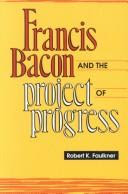
Robert Faulkner, in his penetrating work on Bacon's artful and revolutionary project to reshape and redirect Western civilization, Francis Bacon and the Project of Progress, expresses this sober assessment nicely: "Now it seems that a thoughtful citizen of a modern country must be prepared to defend the benefits of progress, or at least to reconsider them while being aware of the defects as well as the advantages" (p.3).
For example, consider email. Most of us depend on it because we find it useful, and so we use it all the time. But we also sense a downside. What is that disturbing impulse we feel to be constantly checking our inboxes. That's not good. John Freeman explores the complexity of the technology in his book, The Tyranny of E-Mail: The Four-Thousand-Year Journey to Your Inbox. "E-mail might be cheaper, faster and more convenient, but its virtues also make us lazier, lonelier and less articulate."
Also have a look at "Louis c.k." claiming that Everything's Amazing and Nobody's Happy. Warning, this is very funny, and you may see yourself in one of the "spoiled idiots" he describes.

He's entertained by the fact that conservatives and Christians find his routine resonates with what they believe. What they like is clearly the call to moderation and contentment. Louis just despises them, but that's a sign that he doesn't understand either what he's saying or the conservatives and Christians. He himself is incoherent. He meant to condemn capitalism in this routine. He explains this to Opie and Anthony. (The second clip is better than the first, but blasphemous at points.) Yet capitalism is the economic system on which he depends for his lucrative career and high flying lifestyle. He also explains that he is not against technology. He just thinks we should chasten our expectations for it and have a little more peace while using it. This thought has clearly hit a nerve with people given the video's "viral" popularity. People are uncomfortably aware that while technology is good, it affects the way we see the world in ways that are morally unhealthy. And that is a subject worthy of study.

For example, consider email. Most of us depend on it because we find it useful, and so we use it all the time. But we also sense a downside. What is that disturbing impulse we feel to be constantly checking our inboxes. That's not good. John Freeman explores the complexity of the technology in his book, The Tyranny of E-Mail: The Four-Thousand-Year Journey to Your Inbox. "E-mail might be cheaper, faster and more convenient, but its virtues also make us lazier, lonelier and less articulate."
Also have a look at "Louis c.k." claiming that Everything's Amazing and Nobody's Happy. Warning, this is very funny, and you may see yourself in one of the "spoiled idiots" he describes.

He's entertained by the fact that conservatives and Christians find his routine resonates with what they believe. What they like is clearly the call to moderation and contentment. Louis just despises them, but that's a sign that he doesn't understand either what he's saying or the conservatives and Christians. He himself is incoherent. He meant to condemn capitalism in this routine. He explains this to Opie and Anthony. (The second clip is better than the first, but blasphemous at points.) Yet capitalism is the economic system on which he depends for his lucrative career and high flying lifestyle. He also explains that he is not against technology. He just thinks we should chasten our expectations for it and have a little more peace while using it. This thought has clearly hit a nerve with people given the video's "viral" popularity. People are uncomfortably aware that while technology is good, it affects the way we see the world in ways that are morally unhealthy. And that is a subject worthy of study.
Francis Bacon's Very Political Life
As I expect to be posting more regularly on Francis Bacon in his relation to Christianity and modernity, I am reposting this reflection on Perez Zagorin's account of his life in chapter two of his 1998 book, Francis Bacon, the chapter entitled, "Bacon's Two Lives."

Lytton Strachey's question, "Who has ever explained Francis Bacon?," still hangs over Bacon scholarship (Elizabeth and Essex, A Tragic History. Butler Press, 2007; p.9). Perez Zagorin identified the puzzle at the very outset of his book, a study of Bacon's life and thought entitled simply Francis Bacon (Princeton, 1998) :
He could have practiced law, a profession for which he trained at Gray's Inn. Indeed, many suggested that he solve his financial difficulties by pursuing that option, but he simply refused. He could have sought an academic position, but that would not have satisfied him. He desired political office. Though he combined both scientist and politician in his soul, he was fundamentally a man of politics.
On the political side of Bacon's life and character, the puzzle has two aspects. On the one hand, Zagorin tells us that Bacon's political ambitions,
This unceasing quest for ever higher political office raises the question, why would someone so committed to the benefit of the human race through a radical reorientation of the intellect, as Bacon was, concern himself so obsessively with political climbing for the whole of his adult life? While public service is honorable and requires people of ability and integrity for it to be done well, there were many others who were highly qualified to take up that task, whereas Bacon alone had the insight and learning to carry on what he called "the great instauration of man over the universe."
In Of The Interpretation of Nature Proemium, Bacon justifies his tireless pursuit of political power by the ability it would give him to support co-ordinated, publicly useful scientific inquiry with the requisite human and financial resources. He had in mind something like the National Science Foundation, or, better yet, Salomon's House as he describes it in New Atlantis. Thus, Bacon reconciles his two seemly incompatible and personally consuming goals, the scientific and the political, by interpreting the political enterprise in terms of the scientific one. Zagorin, by accepting this explanation, comes across like a woman who believes the sweetly spoken but not entirely plausible stories of her cheating husband (or vice versa; pp. 57f.). He produces no evidence that Bacon actually used what power he had at any given point to give significant support to the work of science as he was planning it out.
Bacon's explanation is unconvincing especially coming from a man who calculated his actions as carefully as he did. It was surely true that he could use the power of his political office to support his scientific project, but the effort that such a plan required was disproportionate to anything he could reasonably hope to obtain. The likelihood of his success not only in achieving a sufficiently powerful position in government, but also in holding that position long enough to accomplish his goals, and then also in actually using it to advance his grand project by arranging the cooperation of whoever else was necessary was uncertain at best, and unpromising at worst. As it turned out, he did not become Lord Chancellor until 1618 at the age of sixty, just eight years before his death, a position he held for only three years before his scandalous downfall. As a plan, it's comparable to betting your nest egg at the dog track. It is an unbaconian reliance on fortune.
Given his extraordinary learning and eloquence, it would have been a more efficient use of Bacon's time with a more promising outcome if he had pursued his projects from a position of academic and literary prominence, and used his powerful persuasive abilities to enlist the great in his cause. But Bacon had no interest in a life so far removed from the direct exercise of political power and its attendant honors. Zagorin himself notes that, "Bacon was irresistibly attracted to politics and would never willingly retire into a private existence" (p.4). Indeed, he never did. Even after he was deposed from power as a result of the bribery scandal, instead of turning his full attention to writing and publishing for a more lasting legacy, he continued to beg and claw for power, even if only the right to take his seat in the House of Lords.
(Bacon himself gives us reason not to take him at his word on this public spirited justification for his political ambition. Bacon scholars are remarkably credulous when it comes to Bacon's public affirmations of traditional morality and notions of virtue. But that is another investigation.)
The second aspect of the puzzle of Bacon's politics is the great difficulty he had in accomplishing his goals. He was frequently passed over, and accomplished what ranks he did only by constantly "asserviling" himself, as he lamented near the end of his life. His difficulties were not for lack of talent and intelligence, however. Zagorin's judgment is that people generally saw through his deceits and were repelled by them, earning him distrust rather than influence. Bacon was a great admirer of Machiavelli, but seemed to lack the virtu to be a successful Machiavellian. He was a notorious dissembler and manager of his own image for political purposes. "I had rather know than be known" (Promus of Formularies and Elegancies in Works XIV:13). Zagorin is also very clear on this point.
Like an orphan who is radically alone and vulnerable in a hostile world, Bacon saw only rivals (like Coke) and instruments (like Essex, the queen herself, and later the king). Zagorin sees this. Bacon, he says, "...regarded other persons purely as means he could exploit to attain his own ends. His object was to aggrandize himself by craft, flattery, and displaying himself in the best possible light" (p.20). One suspects that those who were neither obstacles nor of any use him politically, he used in some other way.
Zagorin identifies Bacon's two contradictory lives, but in fact he had three lives. Whereas his political life compromised his philosophic life, his sexual life compromised his political one. Zagorin spends more than two pages of his short biographical chapter exploring this issue. If Bacon wanted the safest path to high office, then--like Elizabeth, his queen--it would have been prudent of him to commit himself to chastity. He did not.
These contradictions are puzzling only if one accepts Bacon as a genuine philosophical philanthropist with an inscrutable political fixation. On the contrary, it is more reasonable to interpret his scientific project in light of his political ambitions. By this I mean not his politics narrowly conceived (Solomon, Martin, Leary?), but his highest political ambition. He did after all express his philosophic project in strikingly and consistently political language.
Zagorin sets aside his knowledge of Bacon's political obsessions, however, when he turns to consider him as a philosopher. "It is evident that in Bacon's mind the project of developing a philosophy capable of multiplying knowledge and discovery by a true interpretation of nature was his highest, most cherished aim and that to this enterprise other intellectual pursuits were secondary" (p.27). This does not account for his distracting political ambitions, however. If the philosopher is, as Plato says, the one who leaves the cave to pursue the truth, and who would rather remain above, disengaged from the city's concerns, especially the daily concerns, to pursue an understanding of the truth without distraction, then Bacon was no philosopher. He was obsessed with the cave, in particular with it's honors and privileges. He could not even enjoy a graceful retirement in quiet writing and study.
Bacon is tragic figure. He was a man of soaring personal ambition of the sort that would naturally benefit the human race, and indeed has. But he allowed himself to be distracted from his highest goals and most lasting glories by lesser and incompatible accomplishments and pleasures.

Lytton Strachey's question, "Who has ever explained Francis Bacon?," still hangs over Bacon scholarship (Elizabeth and Essex, A Tragic History. Butler Press, 2007; p.9). Perez Zagorin identified the puzzle at the very outset of his book, a study of Bacon's life and thought entitled simply Francis Bacon (Princeton, 1998) :
Francis Bacon lived two separate but interconnected lives. One was the meditative, reserved life of a philosopher, scientific inquirer, and writer of genius, a thinker of soaring ambition and vast range whose project for the reconstruction of philosophy contained a new vision of science and its place in society. The other was the troubled insecure life of a courtier, professional lawyer, politician, royal servant, adviser, and minister to two sovereigns, Elizabeth I and James I, who from early youth to old age never ceased his quest for high position and the favor of the great (p.3).
He could have practiced law, a profession for which he trained at Gray's Inn. Indeed, many suggested that he solve his financial difficulties by pursuing that option, but he simply refused. He could have sought an academic position, but that would not have satisfied him. He desired political office. Though he combined both scientist and politician in his soul, he was fundamentally a man of politics.
On the political side of Bacon's life and character, the puzzle has two aspects. On the one hand, Zagorin tells us that Bacon's political ambitions,
...absorbed a large part of his time and energy, pitting himself against rivals in a continual competition for office and power, diverting him from pursuing some of his most cherished intellectual goals, and forcing him to leave his main philosophical enterprise fragmentary and unfinished (ibid.).
This unceasing quest for ever higher political office raises the question, why would someone so committed to the benefit of the human race through a radical reorientation of the intellect, as Bacon was, concern himself so obsessively with political climbing for the whole of his adult life? While public service is honorable and requires people of ability and integrity for it to be done well, there were many others who were highly qualified to take up that task, whereas Bacon alone had the insight and learning to carry on what he called "the great instauration of man over the universe."
In Of The Interpretation of Nature Proemium, Bacon justifies his tireless pursuit of political power by the ability it would give him to support co-ordinated, publicly useful scientific inquiry with the requisite human and financial resources. He had in mind something like the National Science Foundation, or, better yet, Salomon's House as he describes it in New Atlantis. Thus, Bacon reconciles his two seemly incompatible and personally consuming goals, the scientific and the political, by interpreting the political enterprise in terms of the scientific one. Zagorin, by accepting this explanation, comes across like a woman who believes the sweetly spoken but not entirely plausible stories of her cheating husband (or vice versa; pp. 57f.). He produces no evidence that Bacon actually used what power he had at any given point to give significant support to the work of science as he was planning it out.
Bacon's explanation is unconvincing especially coming from a man who calculated his actions as carefully as he did. It was surely true that he could use the power of his political office to support his scientific project, but the effort that such a plan required was disproportionate to anything he could reasonably hope to obtain. The likelihood of his success not only in achieving a sufficiently powerful position in government, but also in holding that position long enough to accomplish his goals, and then also in actually using it to advance his grand project by arranging the cooperation of whoever else was necessary was uncertain at best, and unpromising at worst. As it turned out, he did not become Lord Chancellor until 1618 at the age of sixty, just eight years before his death, a position he held for only three years before his scandalous downfall. As a plan, it's comparable to betting your nest egg at the dog track. It is an unbaconian reliance on fortune.
Given his extraordinary learning and eloquence, it would have been a more efficient use of Bacon's time with a more promising outcome if he had pursued his projects from a position of academic and literary prominence, and used his powerful persuasive abilities to enlist the great in his cause. But Bacon had no interest in a life so far removed from the direct exercise of political power and its attendant honors. Zagorin himself notes that, "Bacon was irresistibly attracted to politics and would never willingly retire into a private existence" (p.4). Indeed, he never did. Even after he was deposed from power as a result of the bribery scandal, instead of turning his full attention to writing and publishing for a more lasting legacy, he continued to beg and claw for power, even if only the right to take his seat in the House of Lords.
(Bacon himself gives us reason not to take him at his word on this public spirited justification for his political ambition. Bacon scholars are remarkably credulous when it comes to Bacon's public affirmations of traditional morality and notions of virtue. But that is another investigation.)
The second aspect of the puzzle of Bacon's politics is the great difficulty he had in accomplishing his goals. He was frequently passed over, and accomplished what ranks he did only by constantly "asserviling" himself, as he lamented near the end of his life. His difficulties were not for lack of talent and intelligence, however. Zagorin's judgment is that people generally saw through his deceits and were repelled by them, earning him distrust rather than influence. Bacon was a great admirer of Machiavelli, but seemed to lack the virtu to be a successful Machiavellian. He was a notorious dissembler and manager of his own image for political purposes. "I had rather know than be known" (Promus of Formularies and Elegancies in Works XIV:13). Zagorin is also very clear on this point.
The subjects of secrecy, esoteric communication, and the techniques of managing people also came into his works. In his personal relationships with the great and powerful whose favor he desired, his preferred methods were dissimulation, subservience, and flattery... (p.14).
Like an orphan who is radically alone and vulnerable in a hostile world, Bacon saw only rivals (like Coke) and instruments (like Essex, the queen herself, and later the king). Zagorin sees this. Bacon, he says, "...regarded other persons purely as means he could exploit to attain his own ends. His object was to aggrandize himself by craft, flattery, and displaying himself in the best possible light" (p.20). One suspects that those who were neither obstacles nor of any use him politically, he used in some other way.
Zagorin identifies Bacon's two contradictory lives, but in fact he had three lives. Whereas his political life compromised his philosophic life, his sexual life compromised his political one. Zagorin spends more than two pages of his short biographical chapter exploring this issue. If Bacon wanted the safest path to high office, then--like Elizabeth, his queen--it would have been prudent of him to commit himself to chastity. He did not.
These contradictions are puzzling only if one accepts Bacon as a genuine philosophical philanthropist with an inscrutable political fixation. On the contrary, it is more reasonable to interpret his scientific project in light of his political ambitions. By this I mean not his politics narrowly conceived (Solomon, Martin, Leary?), but his highest political ambition. He did after all express his philosophic project in strikingly and consistently political language.
Zagorin sets aside his knowledge of Bacon's political obsessions, however, when he turns to consider him as a philosopher. "It is evident that in Bacon's mind the project of developing a philosophy capable of multiplying knowledge and discovery by a true interpretation of nature was his highest, most cherished aim and that to this enterprise other intellectual pursuits were secondary" (p.27). This does not account for his distracting political ambitions, however. If the philosopher is, as Plato says, the one who leaves the cave to pursue the truth, and who would rather remain above, disengaged from the city's concerns, especially the daily concerns, to pursue an understanding of the truth without distraction, then Bacon was no philosopher. He was obsessed with the cave, in particular with it's honors and privileges. He could not even enjoy a graceful retirement in quiet writing and study.
Bacon is tragic figure. He was a man of soaring personal ambition of the sort that would naturally benefit the human race, and indeed has. But he allowed himself to be distracted from his highest goals and most lasting glories by lesser and incompatible accomplishments and pleasures.
Sunday, September 20, 2009
Evangelizing the Televangelized
Consider this. These Australians are mocking what they think is Christianity.
Can we all agree that what Kenneth Copeland, Benny Hinn and their like give us is not any form of Christianity? Yet unlike your local pastor and mine, these clowns are on television for everyone to see. Sadly, they are perhaps the only people claiming to speak for Christ who penetrate the secular worlds of people like these Australian television entertainers.
There is nothing that anyone can do to eliminate the supply of this nonsense. The right of free speech extends also to snake oil merchandising. But surely we can work on the demand side. Who are these people who are watching, and attending, and (most importantly) funding this stuff? Where are the missionaries to the televangelist audiences?
But I'll end on a light note. If you watch carefully at the end of the video, you can see one of the Aussie "faith healers" flip an old man in a wheelchair. (Let me add that ordinarily that would not be funny.) The tall guy at the very end turns and whacks someone. I didn't catch it until the third viewing.
Can we all agree that what Kenneth Copeland, Benny Hinn and their like give us is not any form of Christianity? Yet unlike your local pastor and mine, these clowns are on television for everyone to see. Sadly, they are perhaps the only people claiming to speak for Christ who penetrate the secular worlds of people like these Australian television entertainers.
There is nothing that anyone can do to eliminate the supply of this nonsense. The right of free speech extends also to snake oil merchandising. But surely we can work on the demand side. Who are these people who are watching, and attending, and (most importantly) funding this stuff? Where are the missionaries to the televangelist audiences?
But I'll end on a light note. If you watch carefully at the end of the video, you can see one of the Aussie "faith healers" flip an old man in a wheelchair. (Let me add that ordinarily that would not be funny.) The tall guy at the very end turns and whacks someone. I didn't catch it until the third viewing.
Saturday, September 12, 2009
Billy Graham's Long Shadow
When a friend recently told me that Woody Allen once interviewed Billy Graham, I thought he was joking. It seemed comparable to Groucho Marx interviewing Cornelius Van Til.
But here it is on YouTube. Billy actually does a great job turning Woody's irreverent jabs into gospel opportunities, and often topping the great comedian with fast and funny come-backs.
I do not know exactly when this interview took place, but my guess is the mid to late 1960s.
For the fun and sheer wonder of it, here is Billy Graham in 1949..
...and 1957...
...and 1971...
After sitting under the sound, Reformed, Evangelical ministry of Dr. Glyn Own at Knox Presbyterian Church in Toronto for 16 months, I came to saving knowledge of God after Billy Graham preached a New years Eve service at the IVCF 1984 Urbana Mission Conference.
We had been blessed for several days with the expository teaching of Rev. Eric Alexander from Glasgow. Through that I came to under stand the connection between the cross and my sin, between Christ's death and my life. That is the heart of the gospel.
Billy Graham closed our several days together--19,000 young people gathered at the University of Illinois in Urbana-Champagne--with a New Year's Eve worship service. During that time, he told us to bow our heads and close out eyes. He asked us, If God were to call you to the mission field, would you go?" Anyone who would was to stand up. My friends, one on each side of me, stood up. They were missionary kids themselves. I did not stand because I had no desire to go off to the far reaches of the world, even despite what I had learned that week about the centrality of missionary work in the life of the church.
After the service, we went directly to out buses to take us wherever on the continent we were going. In the darkness of that bus on my way back to Toronto, I thought about what I had done--or rather not done--that night. By the grace of God I confronted myself, asking, "David! The Lord has given his Son to die for the payment of your sins, and if he tells you to go to Nepal or Brazil you're going to refuse him? You're going to withhold from the One who did not withhold his only Son, his beloved Son for you?" It made no sense at all. So I committed my self to serve him in any way he would direct me to serve him. I count my conversion from that point. I had received Christ as both Lord and Savior (his inseparable offices).
There are things with which I have disagreed in Billy Graham's ministry. The altar call is one of them. But that night--December 31, 1984--God used Billy Graham to bring me into his kingdom, perfecting the labors of others before him. I thank the Lord for Billy Graham.
But here it is on YouTube. Billy actually does a great job turning Woody's irreverent jabs into gospel opportunities, and often topping the great comedian with fast and funny come-backs.
I do not know exactly when this interview took place, but my guess is the mid to late 1960s.
For the fun and sheer wonder of it, here is Billy Graham in 1949..
...and 1957...
...and 1971...
After sitting under the sound, Reformed, Evangelical ministry of Dr. Glyn Own at Knox Presbyterian Church in Toronto for 16 months, I came to saving knowledge of God after Billy Graham preached a New years Eve service at the IVCF 1984 Urbana Mission Conference.
We had been blessed for several days with the expository teaching of Rev. Eric Alexander from Glasgow. Through that I came to under stand the connection between the cross and my sin, between Christ's death and my life. That is the heart of the gospel.
Billy Graham closed our several days together--19,000 young people gathered at the University of Illinois in Urbana-Champagne--with a New Year's Eve worship service. During that time, he told us to bow our heads and close out eyes. He asked us, If God were to call you to the mission field, would you go?" Anyone who would was to stand up. My friends, one on each side of me, stood up. They were missionary kids themselves. I did not stand because I had no desire to go off to the far reaches of the world, even despite what I had learned that week about the centrality of missionary work in the life of the church.
After the service, we went directly to out buses to take us wherever on the continent we were going. In the darkness of that bus on my way back to Toronto, I thought about what I had done--or rather not done--that night. By the grace of God I confronted myself, asking, "David! The Lord has given his Son to die for the payment of your sins, and if he tells you to go to Nepal or Brazil you're going to refuse him? You're going to withhold from the One who did not withhold his only Son, his beloved Son for you?" It made no sense at all. So I committed my self to serve him in any way he would direct me to serve him. I count my conversion from that point. I had received Christ as both Lord and Savior (his inseparable offices).
There are things with which I have disagreed in Billy Graham's ministry. The altar call is one of them. But that night--December 31, 1984--God used Billy Graham to bring me into his kingdom, perfecting the labors of others before him. I thank the Lord for Billy Graham.
Sunday, September 6, 2009
Thoughts on Paedo-Communion
 Calvin serving the Lord's Supper in Geneva
In his communion address this morning, my pastor compared the Lord's Supper to a family meal. As no passage came immediately to mind in support of this image, his remark distracted me as I pondered in what sense this might be true. Yes, the redeemed in Christ are adopted into the family of God. We are born again as brothers and sisters in Christ. And the Lord's Supper is certainly just that: a supper, and thus a meal.
But I quickly thought of what any paedo-communionists in the congregation would do with his image. "Yes," the would say. "Our children are not little pagans. They are part of the covenant family, as their baptism testifies. [True.] So why are they barred from the family meal?" This imaginary objection was troubling to me. So as I am entirely certain that serving communion to unconverted, unregenerate covenant children (paedo-communion) is an erroneous application of covenant theology, I was ready to jettison the family meal image as unhelpful, and confront the pastor at the door.
Then it occurred to me that the problem lay in a misunderstanding of the nature of the Christian spiritual family in contradistinction to the merely natural family. In the natural family, you come to life, then you live life, and then you die. In the spiritual family that is ours in Christ, however, you start out dead, then you come to life, and then you live life forevermore. Paedo-communionists miss this difference, and that is the root of their well-intentioned confusion. I would no sooner administer the communion elements to my infant children than I would to my deceased saintly grandfather (if I had one). Both of them are in my family. Both of them are included in the New Covenant. But both of them are dead, so to administer the bread and the wine to either one of them would be inappropriate at this time.
Saturday, August 29, 2009
Finding Grace in the Sinner's Place

Stanley Voke was a pastor in England in the years following World War II. I once heard him quoted in a sermon as having said: “There is in all of us a struggle to get and keep our own righteousness, which is why it is so hard to come to the sinner’s place.” It stuck with me because it goes powerfully to the very heart of the gospel.
Today, I found a longer statement from Mr. Voke on the subject. It is said to be taken from the second chapter of his book, Reality: The Way of Personal Revival. I found this wonderful exhortation on the Peacemaker website.
The Sinner's Place
BY STANLEY VOKE
"Nothing in my hand I bring, Simply to Thy Cross I cling."
The hardest thing for anyone is to take the sinner's place. So hard in fact that many never take it at all, while others, having once been brought there, do not care to come there again. None are by nature fond of the sinner's place. Yet if we do not come there, we cannot really know Christ or taste the sweetness of God's forgiving grace. If we avoid it, we might as well say "we have no sin" and so deceive ourselves.
TAKING THE SINNER'S PLACE
The sinner's place is where we accept without excuse that we are sinners. We may admit only one sin such as jealousy or pride; we may be convicted of something that seems small, but in so doing we have come again to the sinner's place-though we may have been Christians for many years. Behind each sin God may show us things more serious until not one but many things are admitted and we are brought to admit the whole radical evil of our nature. A man once confessed he had stolen a rope. He brought it back. The next day he returned, this time bringing a cow he had been unwilling to admit was on the end of the rope! When we take the sinner's place, we admit the truth about ourselves-the whole truth.
The sinner's place is where we take blame. We stop excusing ourselves and saying, "I was not really myself when I did that." Instead we bow our head saying, "Yes, Lord, that was me; that is what I am really like." We no longer blame our nerves, our circumstances, or other people. Should someone point out some fault or criticize us, even unkindly, we do not argue and justify ourselves or try to explain things away. We even admit to the critic that if he knew us as we really are he would find much else to criticize. We save endless time and breath when we come quickly to the sinner's place. Indeed things would be different in many a church if the members met regularly there at the sinner's place.
This is the place David took as, when Nathan challenged him, he bowed his head saying, "I have sinned." Here Job stood and cried, "Behold, I am vile," and Isaiah said, "Woe is me! For I am undone." Here the publican prayed, "God be merciful to me a sinner"; here Peter fell at the feet of Jesus saying, "Depart from me; for I am a sinful man." In this place, the prodigal son confessed "Father, I have sinned and am no more worthy." Paul often knelt in the sinner's place and many a saint has watered it with his tears. If we have not come here, we have not yet begun with God (2Sa 12:13, Ps 51:4, Job 40:4, Isa 6:5, Lk 18:13, Lk 5:8, Lk 15:18).
We do not like the sinner's place for we are afraid it will hurt our pride. So we fight, argue, put others in the wrong, excuse ourselves, and in fact do anything rather than take the sinner's place where God awaits to forgive and set us free.
AVOIDING THE SINNER'S PLACE
Often, we avoid this place because we will not call sin, sin. We talk of shortcomings, failures, weaknesses, frailties, faults, disabilities, propensities; anything but sin. A rose by any other name is just as sweet, and sin by any other name is just as evil-to God. The trouble is we make our own definitions instead of accepting God's. In the Scripture, sin is anything short of the glory of God, anything that misses the mark of moral perfection or crosses the line of God's will, anything that is twisted from the plumbline of Divine righteousness whether it be in motive, desire, intention, instinct, thought, habit, look, word, deed, reaction or relationship. If done heedlessly or in ignorance, it is still sin and to call it something else needing neither repentance nor forgiveness is to avoid the sinner's place.
We can refuse to see sin as sin. Maybe we are active people who have no time to bother with such trivialities. We have our positions and programs to maintain. Like Naaman, we are busy winning our laurels while we cover our leprosy. We address meetings, chair committees, take on jobs, give money to this and that-in fact do anything-except confess ourselves spiritual lepers who need to wash and be clean. We are as those in Jeremiah's day who rushed like horses into battle but never stopped to repent or say, "What have I done?" We are so very busy-too busy ever to stand in the sinner's place (Jer 8:6).
We may avoid this place by assuming the role of correctors. With our doctrines neatly tied up, we are evangelical experts with a keen sense of theological smell. We love to correct but not to be corrected. Like the Pharisees of old we keep ourselves out of the sinner's place by putting others in. We are so full of knowledge that we have no room for a broken and contrite heart. Yet even Henry Martyn, great saint as he was, recorded in his diary, "I have resolved never to reprove another except I experience at the same time a peculiar contrition of heart!" He found he needed to live in the sinner's place.
We may avoid this place by making our security in Christ a pretext for non-repentance. We are assured of our salvation, yet somehow we are no longer convicted of sin. We are like the small boy who, when sent from the table to wash his hands, returned with a big smile and the astonishing remark, "Well, they've had such a wash this time they'll never need to be washed again."
We are by faith sons of God and citizens of heaven. But we are still sinners as well. We still need to wash at "the fountain opened for sin and for uncleanness " (Zec 13:1). Grace will never lead us into sin, but it will ever convict us of it, and sin thus revealed will always lead us back to grace. It is possible to avoid the sinner's place by misapplying the blood of Christ, speaking of it as "covering" or "protecting" as did the blood of the Passover lamb. The sacrifice of Christ on Calvary, however, was for sin.
It is an atoning, not simply a protecting agent. If therefore we need it, we do so as sinners coming for cleansing, not as sinless ones needing only to be secured from evil outside ourselves. When we speak only of the blood protecting us, we are avoiding the sinner's place. A student of Spurgeon (a well known English preacher) once preached before him on "The Whole Armor of God." A conceited young man, he dramatized his message, putting on the armor piece by piece, until, having fortified the whole, he waved the sword of the Spirit and cried triumphantly, "And where is the devil now?" Mr. Spurgeon leaned forward and said, "Young man, he's inside that armor!"
We must watch that we do not let Satan in by forsaking the sinner's place. Our hearts are deceitful above all things and, like the mythological Proteus, will adopt any guise to hide their true nature. Beneath our spiritual phraseology and church reputation we are but poor sinners, who need to be cleansed every day in the blood of Jesus.
FINDING GRACE IN THE SINNER'S PLACE
Is it not strange that the place we sinners avoid is the very one the sinless Savior took? Surely if He were the Son of God He would have come down from the Cross! Miracles, mighty sermons, even resurrection itself we could expect of such a One, but not a baptism in Jordan with publicans and harlots, or a criminal execution with murderers and thieves! Yet this is where He came, for His face was set towards this place from all eternity.
There on the same level a sinner met Him that day. Unlike his comrade who died blaming others and cursing God, this dying thief admitted guilt and found forgiveness. Peace and paradise came to him as he took the sinner's place and found Jesus there. This is the paradox of grace. He who insists he is right will be pronounced wrong, while he who admits he is wrong will be declared right. The righteousness of God is only given to those who stand in the sinner's place.Here and here alone is the place of true peace, for here we cease our strivings and find our God. Here is rest of heart and heaven's door. Here we cast away our pretense, and admit what we really are. Here we come to Jesus to be cleansed by His precious blood. Here the Holy Spirit fills and holiness is found. Here are the springs of revival. This is where the whole church needs to come again and again. It is the place of truth and grace and freedom-the sinner's place. When were you last there? In fact, are you there now?
Thursday, July 9, 2009
Kids Don't Need You To Be Cool
This is hilarious. How much does your church's youth ministry resemble this?
In your church's youth ministry, what is the role of, or attitude toward:
1. the Scriptures?
2. prayer?
3. pop culture?
4. prudence?
First of all, your church's youth pastors should be...the parents! Your church's youth ministry should be one that equips parents to disciple their own children, i.e. to be godly parents.
But if you must have a youth pastor, remember that kids don't need someone just like themselves except older, nor do they want that. They need godly maturity in someone who loves them, but who loves God even more.
The church I first attended and where I first heard the gospel was Knox Presbyterian Church in Toronto. They had a youth pastor, but he was not young. He was once young. He was a soccer star in Ireland in the 1950s who came out to Canada at the invitation of Rev. William Fitch. I can't comment on the state of his ministry in the 1950s, but when he retired in the early 1980s, he was loved and admired by all the young people in the church and neighborhood. At that point, he certainly wasn't cool, but he was everything those kids needed and he led great numbers of them to Christ, and to ever greater maturity in Christ.
In your church's youth ministry, what is the role of, or attitude toward:
1. the Scriptures?
2. prayer?
3. pop culture?
4. prudence?
First of all, your church's youth pastors should be...the parents! Your church's youth ministry should be one that equips parents to disciple their own children, i.e. to be godly parents.
But if you must have a youth pastor, remember that kids don't need someone just like themselves except older, nor do they want that. They need godly maturity in someone who loves them, but who loves God even more.
The church I first attended and where I first heard the gospel was Knox Presbyterian Church in Toronto. They had a youth pastor, but he was not young. He was once young. He was a soccer star in Ireland in the 1950s who came out to Canada at the invitation of Rev. William Fitch. I can't comment on the state of his ministry in the 1950s, but when he retired in the early 1980s, he was loved and admired by all the young people in the church and neighborhood. At that point, he certainly wasn't cool, but he was everything those kids needed and he led great numbers of them to Christ, and to ever greater maturity in Christ.
Gospel, Church, and Culture
I think this is from Mark Driscoll, the Mars Hill Church pastor in Seattle.

Diagrams and models like this can be very helpful. For example, I think it was a church-growth PCA guy (Scotty Smith?) who described the work of the church as "upreach, inreach, and outreach." It's a poetic way of saying, "You have to be all of these because they're related, and your church life is incomplete without any one of these activities."
I think that this broad distribution of emphasis (I'm avoiding the word "balance") is related to what I was getting at in my Multi-polar Christian Piety post a while ago.

Diagrams and models like this can be very helpful. For example, I think it was a church-growth PCA guy (Scotty Smith?) who described the work of the church as "upreach, inreach, and outreach." It's a poetic way of saying, "You have to be all of these because they're related, and your church life is incomplete without any one of these activities."
I think that this broad distribution of emphasis (I'm avoiding the word "balance") is related to what I was getting at in my Multi-polar Christian Piety post a while ago.
Friday, July 3, 2009
Explaining Francis Bacon
Lytton Strachey's question, "Who has ever explained Francis Bacon?," still hangs over Bacon scholarship (Elizabeth and Essex, A Tragic History. Butler Press, 2007; p.9). Perez Zagorin identified the puzzle at the very outset of his book, a study of Bacon's life and thought entitled simply Francis Bacon (Princeton, 1998) :
Francis Bacon lived two separate but interconnected lives. One was the meditative, reserved life of a philosopher, scientific inquirer, and writer of genius, a thinker of soaring ambition and vast range whose project for the reconstruction of philosophy contained a new vision of science and its place in society. The other was the troubled insecure life of a courtier, professional lawyer, politician, royal servant, adviser, and minister to two sovereigns, Elizabeth I and James I, who from early youth to old age never ceased his quest for high position and the favor of the great (p.3).
He could have practiced law, a profession for which he trained at Gray's Inn. Indeed, many suggested that he solve his financial difficulties by pursuing that option, but he simply refused. He could have sought an academic position, but that would not have satisfied him. He desired political office. Though he combined both scientist and politician in his soul, he was fundamentally a man of politics.
On the political side of Bacon's life and character, the puzzle has two aspects. On the one hand, Zagorin tells us that Bacon's political ambitions,
...absorbed a large part of his time and energy, pitting himself against rivals in a continual competition for office and power, diverting him from pursuing some of his most cherished intellectual goals, and forcing him to leave his main philosophical enterprise fragmentary and unfinished (ibid.).
This unceasing quest for ever higher political office raises the question, why would someone so committed to the benefit of the human race through a radical reorientation of the intellect, as Bacon was, concern himself so obsessively with political climbing for the whole of his adult life? While public service is honorable and requires people of ability and integrity for it to be done well, there were many others who were highly qualified to take up that task, whereas Bacon alone had the insight and learning to carry on what he called "the great instauration of man over the universe."
In Of The Interpretation of Nature Proemium, Bacon justifies his tireless pursuit of political power by the ability it would give him to support co-ordinated, publicly useful scientific inquiry with the requisite human and financial resources. He had in mind something like the National Science Foundation, or, better yet, Salomon's House as he describes it in New Atlantis. Thus, Bacon reconciles his two seemly incompatible and personally consuming goals, the scientific and the political, by interpreting the political enterprise in terms of the scientific one. Zagorin, by accepting this explanation, comes across like a woman who believes the sweetly spoken but not entirely plausible stories of her cheating husband (or vice versa; pp. 57f.). He produces no evidence that Bacon actually used what power he had at any given point to give significant support to the work of science as he was planning it out.
Bacon's explanation is unconvincing especially coming from a man who calculated his actions as carefully as he did. It was surely true that he could use the power of his political office to support his scientific project, but the effort that such a plan required was disproportionate to anything he could reasonably hope to obtain. The likelihood of his success not only in achieving a sufficiently powerful position in government, but also in holding that position long enough to accomplish his goals, and then also in actually using it to advance his grand project by arranging the cooperation of whoever else was necessary was uncertain at best, and unpromising at worst. As it turned out, he did not become Lord Chancellor until 1618 at the age of sixty, just eight years before his death, a position he held for only three years before his scandalous downfall. As a plan, it's comparable to betting your nest egg at the dog track. It is an unbaconian reliance on fortune.
Given his extraordinary learning and eloquence, it would have been a more efficient use of Bacon's time with a more promising outcome if he had pursued his projects from a position of academic and literary prominence, and used his powerful persuasive abilities to enlist the great in his cause. But Bacon had no interest in a life so far removed from the direct exercise of political power and its attendant honors. Zagorin himself notes that, "Bacon was irresistibly attracted to politics and would never willingly retire into a private existence" (p.4). Indeed, he never did. Even after he was deposed from power as a result of the bribery scandal, instead of turning his full attention to writing and publishing for a more lasting legacy, he continued to beg and claw for power, even if only the right to take his seat in the House of Lords.
(Bacon himself gives us reason not to take him at his word on this public spirited justification for his political ambition. Bacon scholars are remarkably credulous when it comes to Bacon's public affirmations of traditional morality and notions of virtue. But that is another investigation.)
The second aspect of the puzzle of Bacon's politics is the great difficulty he had in accomplishing his goals. He was frequently passed over, and accomplished what ranks he did only by constantly "asserviling" himself, as he lamented near the end of his life. His difficulties were not for lack of talent and intelligence, however. Zagorin's judgment is that people generally saw through his deceits and were repelled by them, earning him distrust rather than influence. Bacon was a great admirer of Machiavelli, but seemed to lack the virtu to be a successful Machiavellian. He was a notorious dissembler and manager of his own image for political purposes. "I had rather know than be known" (Promus of Formularies and Elegancies in Works XIV:13). Zagorin is also very clear on this point.
The subjects of secrecy, esoteric communication, and the techniques of managing people also came into his works. In his personal relationships with the great and powerful whose favor he desired, his preferred methods were dissimulation, subservience, and flattery... (p.14).
Like an orphan who is radically alone and vulnerable in a hostile world, Bacon saw only rivals (like Coke) and instruments (like Essex, the queen herself, and later the king). Zagorin sees this. Bacon, he says, "...regarded other persons purely as means he could exploit to attain his own ends. His object was to aggrandize himself by craft, flattery, and displaying himself in the best possible light" (p.20). One suspects that those who were neither obstacles nor of any use him politically, he used in some other way.
Zagorin identifies Bacon's two contradictory lives, but in fact he had three lives. Whereas his political life compromised his philosophic life, his sexual life compromised his political one. Zagorin spends more than two pages of his short biographical chapter exploring this issue. If Bacon wanted the safest path to high office, then--like Elizabeth, his queen--it would have been prudent of him to commit himself to chastity. He did not.
These contradictions are puzzling only if one accepts Bacon as a genuine philosophical philanthropist with an inscrutable political fixation. On the contrary, it is more reasonable to interpret his scientific project in light of his political ambitions. By this I mean not his politics narrowly conceived (Solomon, Martin, Leary?), but his highest political ambition. He did after all express his philosophic project in strikingly and consistently political language.
Zagorin sets aside his knowledge of Bacon's political obsessions, however, when he turns to consider him as a philosopher. "It is evident that in Bacon's mind the project of developing a philosophy capable of multiplying knowledge and discovery by a true interpretation of nature was his highest, most cherished aim and that to this enterprise other intellectual pursuits were secondary" (p.27). This does not account for his distracting political ambitions, however. If the philosopher is, as Plato says, the one who leaves the cave to pursue the truth, and who would rather remain above, disengaged from the city's concerns, especially the daily concerns, to pursue an understanding of the truth without distraction, then Bacon was no philosopher. He was obsessed with the cave, in particular with it's honors and privileges. He could not even enjoy a graceful retirement in quiet writing and study.
Bacon is tragic figure. He was a man of soaring personal ambition of the sort that would naturally benefit the human race, and indeed has. But he allowed himself to be distracted from his highest goals and most lasting glories by lesser and incompatible accomplishments and pleasures.
Thursday, May 14, 2009
Who But God...?
For several years, there has been an email circulating with pictures of a rare flower from Thailand called the Parrot Flower. It is a form of Internet apologetics that asks, "Who but God could do this?"


Just as there are people who fabricate things like this--I assume to make Christians look gullible--so too there are people who call anything of this sort a hoax because it makes the Christian's point a little too nicely.
But Hoax-Slayers tells us that this is indeed the rare Impatiens psittacina that grows in Thailand, Myanmar and portions of east India. Psittacina means "parrot-like."
"[I]nformation about the plant was first published in 1901 in the Curtis Botanical Journal Magazine by the botanist Joseph Dalton Hooker. And the now famous photographs included above were taken by a Thai grower of the plant in 2001."
For the full story on these remarkable creatures, go to The Exotic Rainforest and for more pictures, consult the same folks here.
It is marvelous that God would limit such a glorious work to so small a region, the way he places beautiful, colorful fish in the deep depths of the ocean where no one can see them.


Just as there are people who fabricate things like this--I assume to make Christians look gullible--so too there are people who call anything of this sort a hoax because it makes the Christian's point a little too nicely.
But Hoax-Slayers tells us that this is indeed the rare Impatiens psittacina that grows in Thailand, Myanmar and portions of east India. Psittacina means "parrot-like."
"[I]nformation about the plant was first published in 1901 in the Curtis Botanical Journal Magazine by the botanist Joseph Dalton Hooker. And the now famous photographs included above were taken by a Thai grower of the plant in 2001."
For the full story on these remarkable creatures, go to The Exotic Rainforest and for more pictures, consult the same folks here.
It is marvelous that God would limit such a glorious work to so small a region, the way he places beautiful, colorful fish in the deep depths of the ocean where no one can see them.
Wednesday, May 13, 2009
The Devil Is In The Antitheses

On the Emerging Church movement:
So which shall we choose?
Experience or truth? The left wing of an airplane, or the right? Love or integrity? Study or service? Evangelism or discipleship? The front wheels of a car, or the rear? Subjective knowledge or objective knowledge? Faith or obedience?
Damn all false antithesis to hell, for they generate false gods, they perpetuate idols, they twist and distort our souls, they launch the church into violent pendulum swings whose oscillations succeed only in dividing brothers and sisters in Christ.
Donald Carson, Becoming Conversant with the Emerging Church, p. 234.
You can hear D. A. Carson's sermons at SermonAudio.com.
Friday, April 17, 2009
His Sheep Follow Him
If the elders in Christ's church were like these sheep dogs, and if we were to obey them the way these sheep obey these sheep dogs, the church would be more beautiful and glorious in its life on earth as what you will see in this amazing display of synchronized shepherding.
We continue to unfold glories from God's creation, and parables of his kingdom.
The great chapter in which Jesus describes himself as the Good Shepherd is chapter 10 of The Gospel According to John.
"He who enters by the door is the shepherd of the sheep. To him the gatekeeper opens. The sheep hear his voice, and he calls his own sheep by name and leads them out. When he has brought out all his own, he goes before them, and the sheep follow him, for they know his voice" (vv. 2-4 ESV).
"My sheep hear my voice, and I know them, and they follow me. I give them eternal life, and they will never perish, and no one will snatch them out of my hand" (vv. 27-28).
We continue to unfold glories from God's creation, and parables of his kingdom.
The great chapter in which Jesus describes himself as the Good Shepherd is chapter 10 of The Gospel According to John.
"He who enters by the door is the shepherd of the sheep. To him the gatekeeper opens. The sheep hear his voice, and he calls his own sheep by name and leads them out. When he has brought out all his own, he goes before them, and the sheep follow him, for they know his voice" (vv. 2-4 ESV).
"My sheep hear my voice, and I know them, and they follow me. I give them eternal life, and they will never perish, and no one will snatch them out of my hand" (vv. 27-28).
Tuesday, April 14, 2009
The Sportsman and the Well Lived Life
These displays of upper body strength are a wonder to behold.
Amazing as they as, however, I wonder how important it is that they do not actually accomplish anything. The Guinness Book of World Records contains accounts of many things that in themselves are impressive but that more broadly considered are utterly pointless. Sitting on a pole for a very long time comes to mind. After initially admiring the record holder's stamina, or whatever, one cannot help but ask if this is the best use of the fellow's time.
Much of what passes for sports strikes me the same way. Much of modern athletic competition combines the awesome and the trivial--rare human ability combined with fruitless endeavor. But it has not always been so. Many athletic competitions have their origins in agriculture and warfare. Consider the Scottish highland games. Large men throwing things and pulling ropes are practicing competitively what they ordinarily they do on their farms. Consider also the Olympic Games. Traditionally, what do you see? Running. Throwing the javelin. Wrestling. Riding. Shooting. Each of these games, in its original conception, was a display of strength and skills in public competition that were useful in vitally important enterprises. The athletic achievement was not ultimately for its own sake but had reference to these larger, life-sustaining activities.
Those activities--subduing the earth by one's labor and subduing one's enemies in battle--face daunting challenges and so require awesome human accomplishments when done well. We celebrate those accomplishments, and thus also encourage them, by these competitions.
Athletics are healthy both physically and psychologically. I knew a man for whom golf was an antidote to depression. It keeps my parents young and limber. Athletics are also good for the character of the young, when done properly. Wrestling in high school impressed good habits of discipline in me. It is said that the Battle of Waterloo was won on the playing fields of Eton. Athletics can be serious business.
But athletics becomes trivial when it becomes merely entertainment, amusement, diversion. Though baseball played at its best involves amazing feats of skill and strength, it is of no consequence whether the Yankees or the Red Sox wins the World Series. (Put aside your partisan passions and admit it.) The same is true of the the feats of upper body strength in this video. Yes, they are astounding, but to what end? It is true that they are beautiful, and that is good in itself. It brings out more fully the glory of God's creation. That's wonderful, but God calls us to put his marvelous creation to godly use.
Why do we celebrate these isolated acts of strength and skills without context? Perhaps we no longer believe in ends, but we still can't help be impressed by the means by which we once pursued those ends.
Athletics of this sort remind me of what has become of art. We have removed it from the churches and great houses because so many of us no longer believe in church and great families. So too, now that agriculture and war are mechanized, we can appreciate the yeoman and the warrior in isolation of what called forth the heights of their achievements. We can appreciate their virtuosity without their virtue.
Art has become abstract not only in its form, but also in its placement (if that's right way to put it). We deprive it of any meaningful setting. It goes straight from studio to gallery, unless one turns a living room into a gallery. Art used to serve a function. It used to communicate a story or remember a relative or a person of great accomplishment. It helped us see the special beauty of a landscape or even of a beggar child. What I'm questioning is the value of athletics when it becomes so self-referential, so self-sufficient that it becomes comparable to art-divorced-from-life.
Am I being overly pragmatic in all of this? Disgracefully utilitarian? What about beauty for its own sake? It is possible, however, to appreciate the aesthetic aspect of a beautiful act or artifact and still set it to work in something that has a larger meaning. It's not so much utility that I have in mind, as it is some larger meaning or narrative, or the affirmation of an important truth, as art does when it is done well.
Amazing as they as, however, I wonder how important it is that they do not actually accomplish anything. The Guinness Book of World Records contains accounts of many things that in themselves are impressive but that more broadly considered are utterly pointless. Sitting on a pole for a very long time comes to mind. After initially admiring the record holder's stamina, or whatever, one cannot help but ask if this is the best use of the fellow's time.
Much of what passes for sports strikes me the same way. Much of modern athletic competition combines the awesome and the trivial--rare human ability combined with fruitless endeavor. But it has not always been so. Many athletic competitions have their origins in agriculture and warfare. Consider the Scottish highland games. Large men throwing things and pulling ropes are practicing competitively what they ordinarily they do on their farms. Consider also the Olympic Games. Traditionally, what do you see? Running. Throwing the javelin. Wrestling. Riding. Shooting. Each of these games, in its original conception, was a display of strength and skills in public competition that were useful in vitally important enterprises. The athletic achievement was not ultimately for its own sake but had reference to these larger, life-sustaining activities.
Those activities--subduing the earth by one's labor and subduing one's enemies in battle--face daunting challenges and so require awesome human accomplishments when done well. We celebrate those accomplishments, and thus also encourage them, by these competitions.
Athletics are healthy both physically and psychologically. I knew a man for whom golf was an antidote to depression. It keeps my parents young and limber. Athletics are also good for the character of the young, when done properly. Wrestling in high school impressed good habits of discipline in me. It is said that the Battle of Waterloo was won on the playing fields of Eton. Athletics can be serious business.
But athletics becomes trivial when it becomes merely entertainment, amusement, diversion. Though baseball played at its best involves amazing feats of skill and strength, it is of no consequence whether the Yankees or the Red Sox wins the World Series. (Put aside your partisan passions and admit it.) The same is true of the the feats of upper body strength in this video. Yes, they are astounding, but to what end? It is true that they are beautiful, and that is good in itself. It brings out more fully the glory of God's creation. That's wonderful, but God calls us to put his marvelous creation to godly use.
Why do we celebrate these isolated acts of strength and skills without context? Perhaps we no longer believe in ends, but we still can't help be impressed by the means by which we once pursued those ends.
Athletics of this sort remind me of what has become of art. We have removed it from the churches and great houses because so many of us no longer believe in church and great families. So too, now that agriculture and war are mechanized, we can appreciate the yeoman and the warrior in isolation of what called forth the heights of their achievements. We can appreciate their virtuosity without their virtue.
Art has become abstract not only in its form, but also in its placement (if that's right way to put it). We deprive it of any meaningful setting. It goes straight from studio to gallery, unless one turns a living room into a gallery. Art used to serve a function. It used to communicate a story or remember a relative or a person of great accomplishment. It helped us see the special beauty of a landscape or even of a beggar child. What I'm questioning is the value of athletics when it becomes so self-referential, so self-sufficient that it becomes comparable to art-divorced-from-life.
Am I being overly pragmatic in all of this? Disgracefully utilitarian? What about beauty for its own sake? It is possible, however, to appreciate the aesthetic aspect of a beautiful act or artifact and still set it to work in something that has a larger meaning. It's not so much utility that I have in mind, as it is some larger meaning or narrative, or the affirmation of an important truth, as art does when it is done well.
Friday, April 10, 2009
Slow Down and Behold the Glory of God
 "Densmore Shute Bends the Shaft, 1938"
Dr. Harold Edgerton,
the M.I.T. professor who pioneered the art of high-speed photography
Advances in technology have allowed us to observe a level of glorious detail in God's creation that has been previously hidden from us. Dr. Harold Edgerton at M.I.T. pioneered the art of high speed photography, allowing us to see the remarkable movements of the hummingbird, the golfer's swing, and a bullet's path of destruction through an apple.
Here is a marvelous video various slow motions we have the privilege of seeing, now even from the convenience of a home computer.
To top it off, you now have the privilege of doing the high speed photography easily with your own camera, as David Pogue of the New York Times demonstrates.
Now he tells us that Casio has reproduced the capability of that $1000 SLR camera in a pocket sized $350 camera ("Cameras With Time-Machine Powers").
It's not technology that's amazing, nor even we technologists, but God who made this wonderful world, the fullness of whose wonders we are far from exhausting.
O Lord my God, When I in awesome wonder,
Consider all the worlds Thy Hands have made;
I see the stars, I hear the rolling thunder,
Thy power throughout the universe displayed.
Then sings my soul, My Saviour God, to Thee,
How great Thou art, How great Thou art.
Then sings my soul, My Saviour God, to Thee,
How great Thou art, How great Thou art!
When through the woods, and forest glades I wander,
And hear the birds sing sweetly in the trees.
When I look down, from lofty mountain grandeur
And see the brook, and feel the gentle breeze.
Then sings my soul, My Saviour God, to Thee,
How great Thou art, How great Thou art.
Then sings my soul, My Saviour God, to Thee,
How great Thou art, How great Thou art!
And when I think, that God, His Son not sparing;
Sent Him to die, I scarce can take it in;
That on the Cross, my burden gladly bearing,
He bled and died to take away my sin.
Then sings my soul, My Saviour God, to Thee,
How great Thou art, How great Thou art.
Then sings my soul, My Saviour God, to Thee,
How great Thou art, How great Thou art!
When Christ shall come, with shout of acclamation,
And take me home, what joy shall fill my heart.
Then I shall bow, in humble adoration,
And then proclaim: "My God, how great Thou art!"
Then sings my soul, My Saviour God, to Thee,
How great Thou art, How great Thou art.
Then sings my soul, My Saviour God, to Thee,
How great Thou art, How great Thou art!
"O Store Gud," written by Swedish pastor, Carl Gustaf Boberg (1859-1940) in 1891. Translated into English in 1949 by Stuart Hine, a missionary to Russia where he encountered the hymn.
Subscribe to:
Posts (Atom)